CompoZa
Describe a screen in plain words — a team of AI agents writes production-ready Jetpack Compose.
- Status
- Web app live on Vercel (checked); agent backend and web frontend are public on GitHub.
- Period
- 2026
- Platforms
- Web · Android
- Live
- Visit live site
01Overview
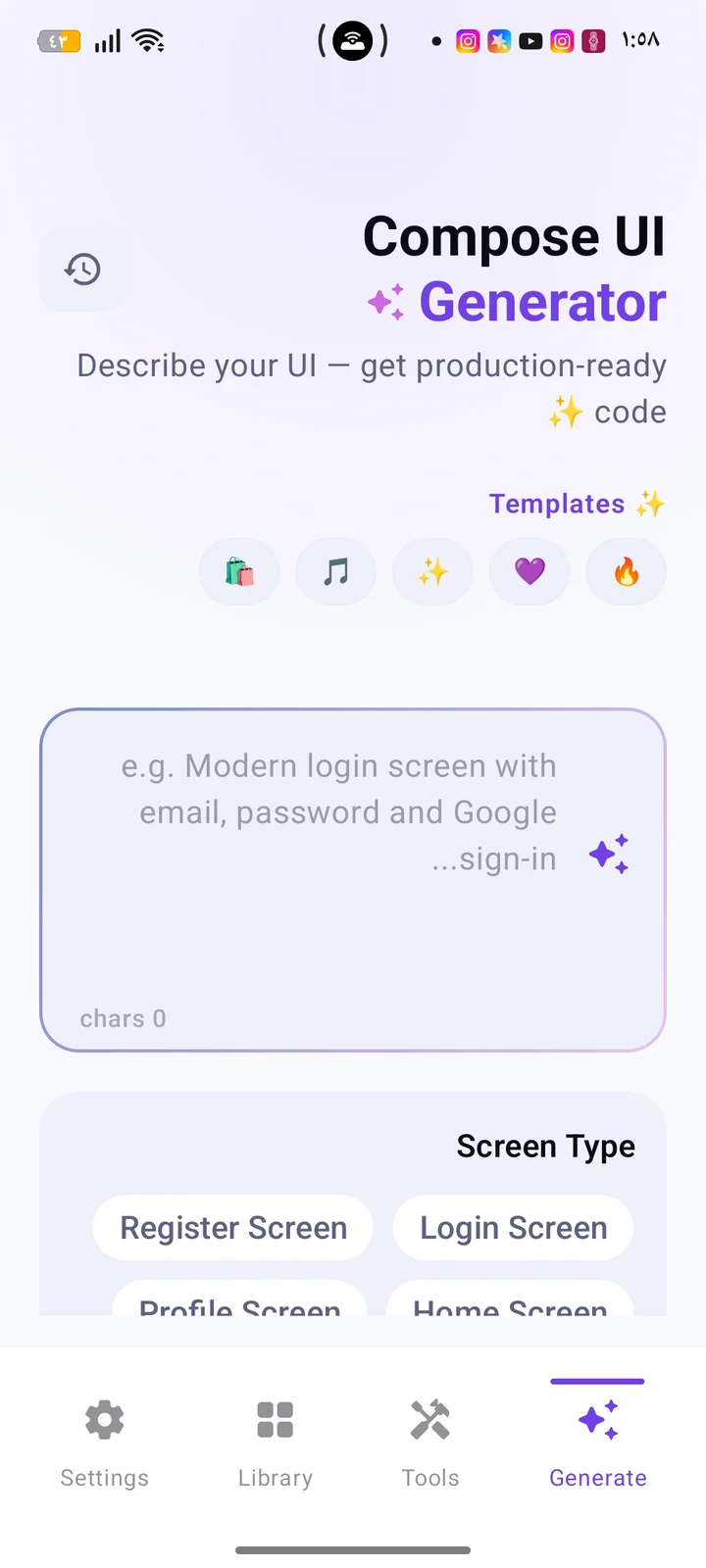
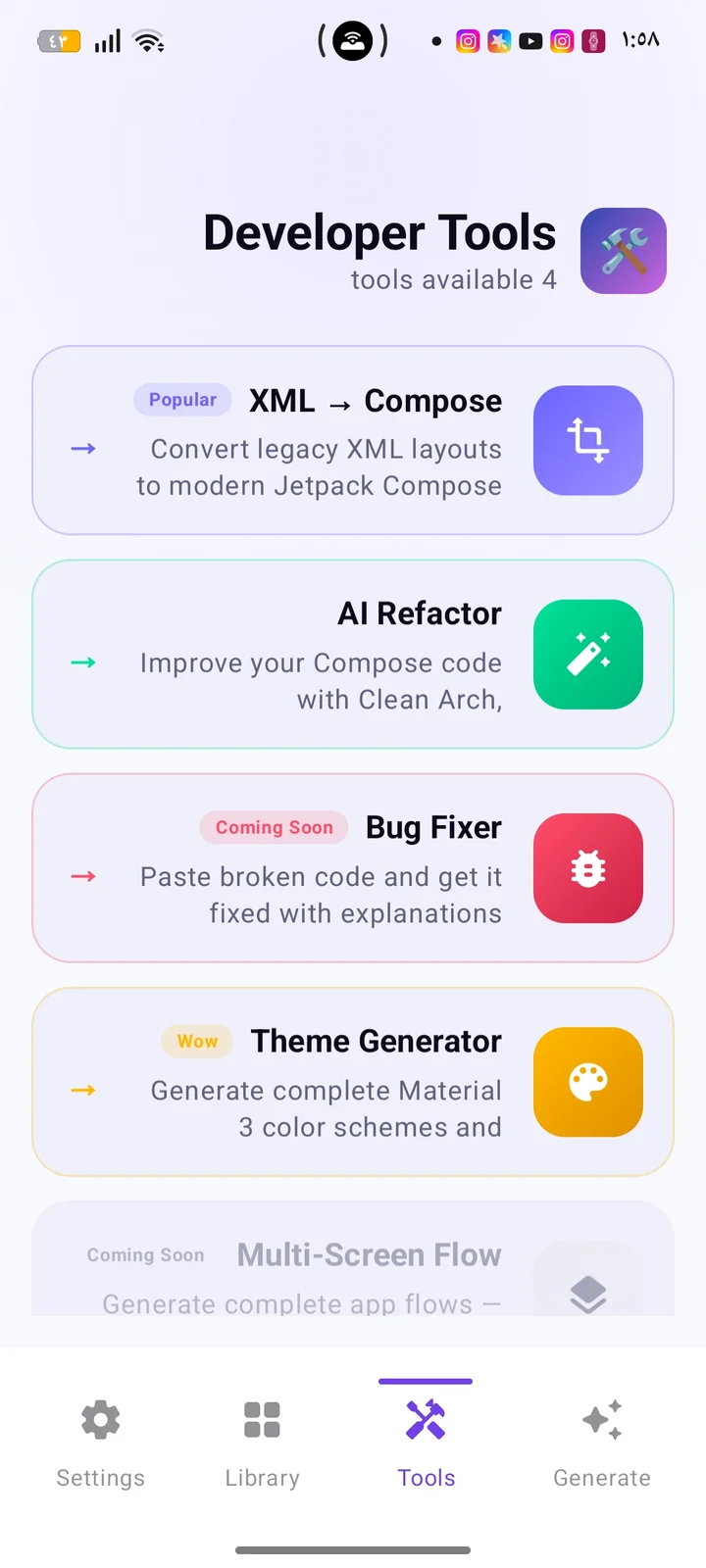
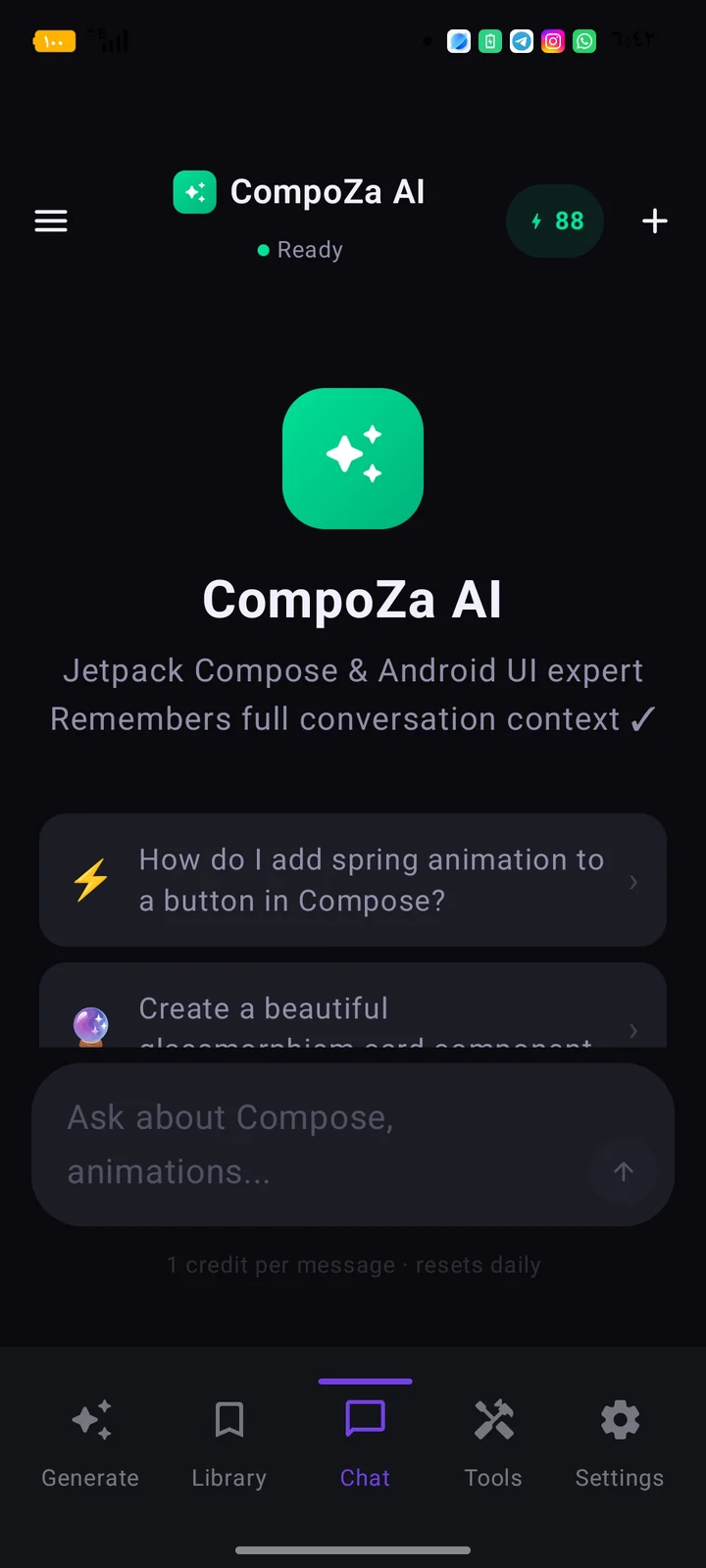
An AI platform for Android developers: a LangGraph pipeline of planner, searcher, coder and reviewer agents generates Compose screens, themes and navigation, grounded by retrieval over a ChromaDB store of Compose knowledge. It ships as a live web app and an Android app with a generator, a component library, developer tools (XML → Compose, refactor, bug fixer, theme generator) and an AI chat.
By the numbers
- cooperating agents
- 4
- cooperating agents
- agents/graph.py
- API routers
- 6
- API routers
- main.py
- selectable model providers
- 5
- selectable model providers
- app settings screen
02The problem
Turning a UI idea into idiomatic Compose — state hoisting, Material 3, previews, navigation — is slow, and general chatbots happily invent APIs that do not compile.
03The solution
Split the work between specialised agents and ground them: the planner sizes the request, complex requests trigger a search step over Compose documentation and the web, the coder generates each screen with retrieved examples in context, and a reviewer step checks every file before results stream back to the user.
04Key features
- 01
Multi-agent generation
Planner → (searcher) → coder → reviewer as a LangGraph state graph; the search step is skipped for simple requests to save time and tokens.
- 02
Retrieval over Compose knowledge
A ChromaDB collection seeded with Compose patterns is queried for each screen, so generated code leans on verified APIs instead of invented ones.
- 03
Developer tools
XML → Compose conversion, AI refactor (clean architecture, performance, M3), bug fixer with explanations and a Material 3 theme generator.
- 04
Streaming progress
Agent runs stream step-by-step events to the client, with a synchronous endpoint for simple integrations.
- 05
Credits, plans and providers
Daily credits per user, plan upgrades with Paddle payments, and a choice of model providers (Groq, Gemini, Claude, OpenAI, OpenRouter) in the app.
05Screens
06System architecture
- L1Clients
- React + Vite web (Vercel)
- Android app (Compose)
- L2API
- FastAPI
- /generate
- /chat
- /agent (stream + sync)
- /rag
- /credits
- /payments
- L3Agents
- planner
- searcher (conditional)
- coder
- reviewer
- L4Knowledge
- ChromaDB compose_knowledge
- Compose docs search
- Web search
- Generation memory
- L5Models
- Groq · llama-3.3-70b-versatile
- per-plan model routing
07Engineering decisions
Search only when the plan is complex
The planner labels each request's complexity; a conditional edge sends medium and complex requests through the searcher and simple ones straight to the coder.
A reviewer that does not hallucinate
The review step is deterministic: it flags empty files and missing imports and computes a quality score, rather than asking another model whether the code looks fine.
My contribution
Designed and built the agent backend, the web app and the Android app.
Technology
- Python
- FastAPI
- LangGraph
- LangChain
- RAG
- ChromaDB
- Groq
- LLM
- AI Agents
- React
- TypeScript
- Vite
- Zustand
- Framer Motion
- Kotlin
- Jetpack Compose
How this was verified
Agent backend and web frontend reviewed from the public repositories; the web app was checked live and captured; Android screens are from a real phone. The Android source was not among the supplied folders.
Related projects
Wakeel
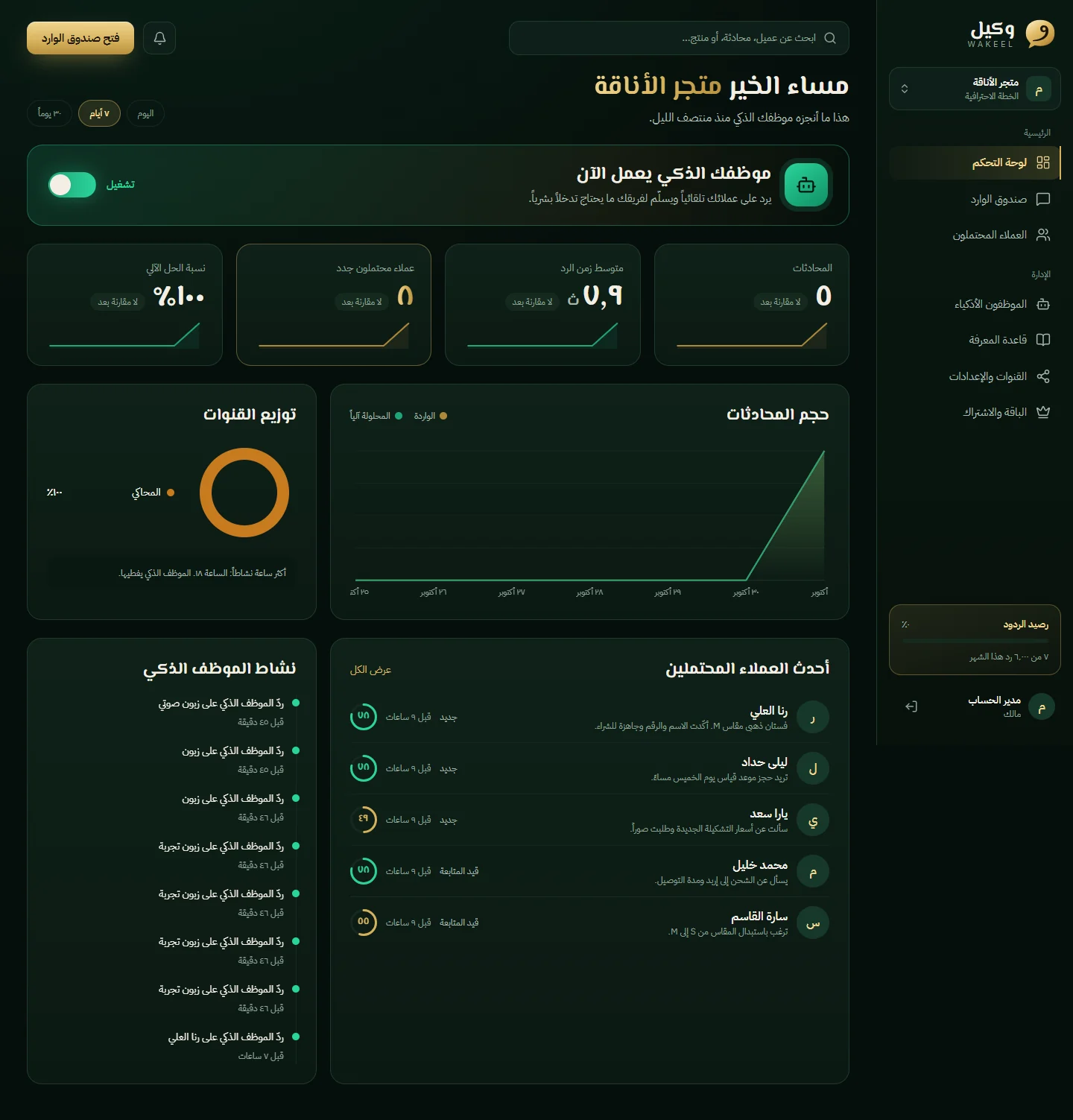
وكيلAn AI employee that answers a business's customers on WhatsApp, Instagram and Messenger — in their own Arabic dialect.
BetaSaaSAIWeb
NOVA
A voice-first personal AI operating system — where a permission layer, not the model, decides what may run.
In developmentAndroidAIDesktop
Elevo
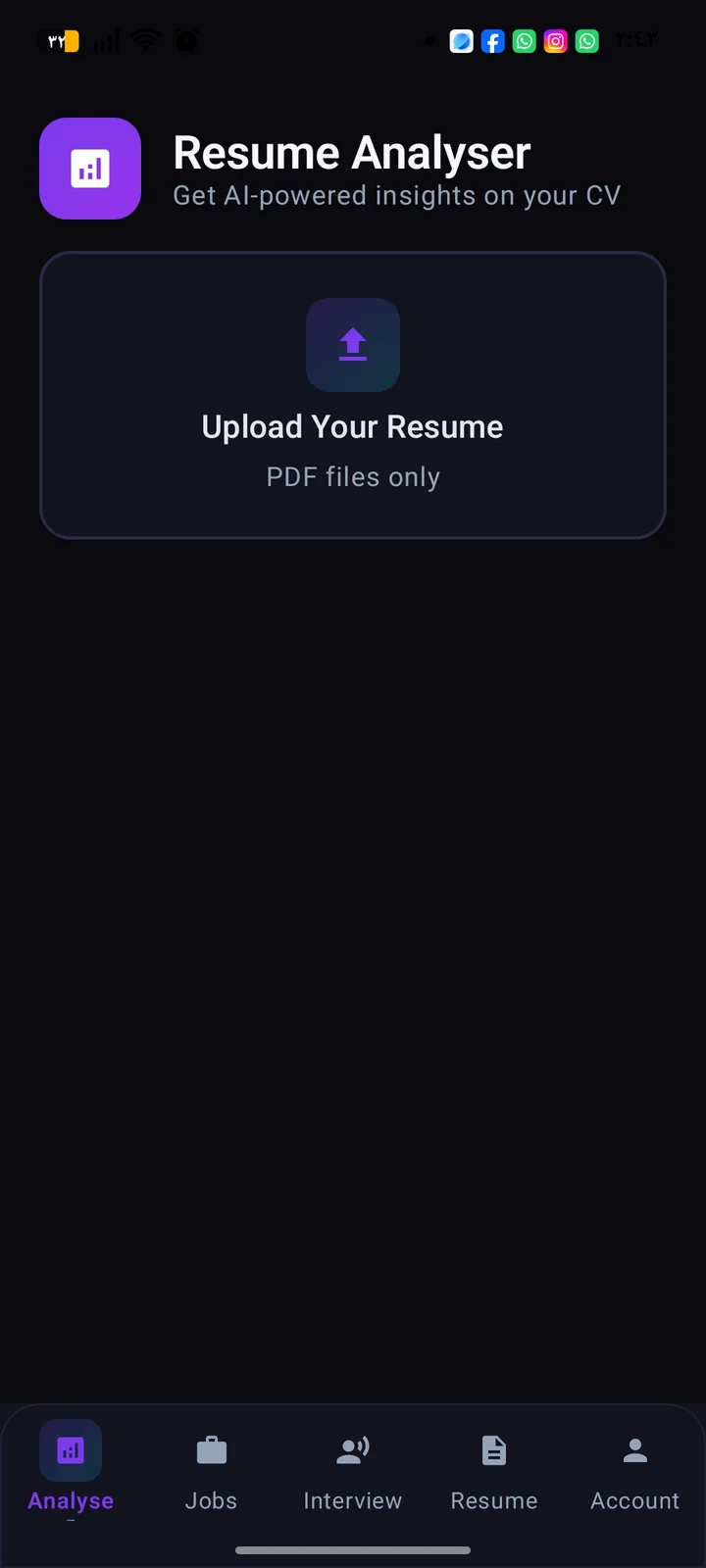
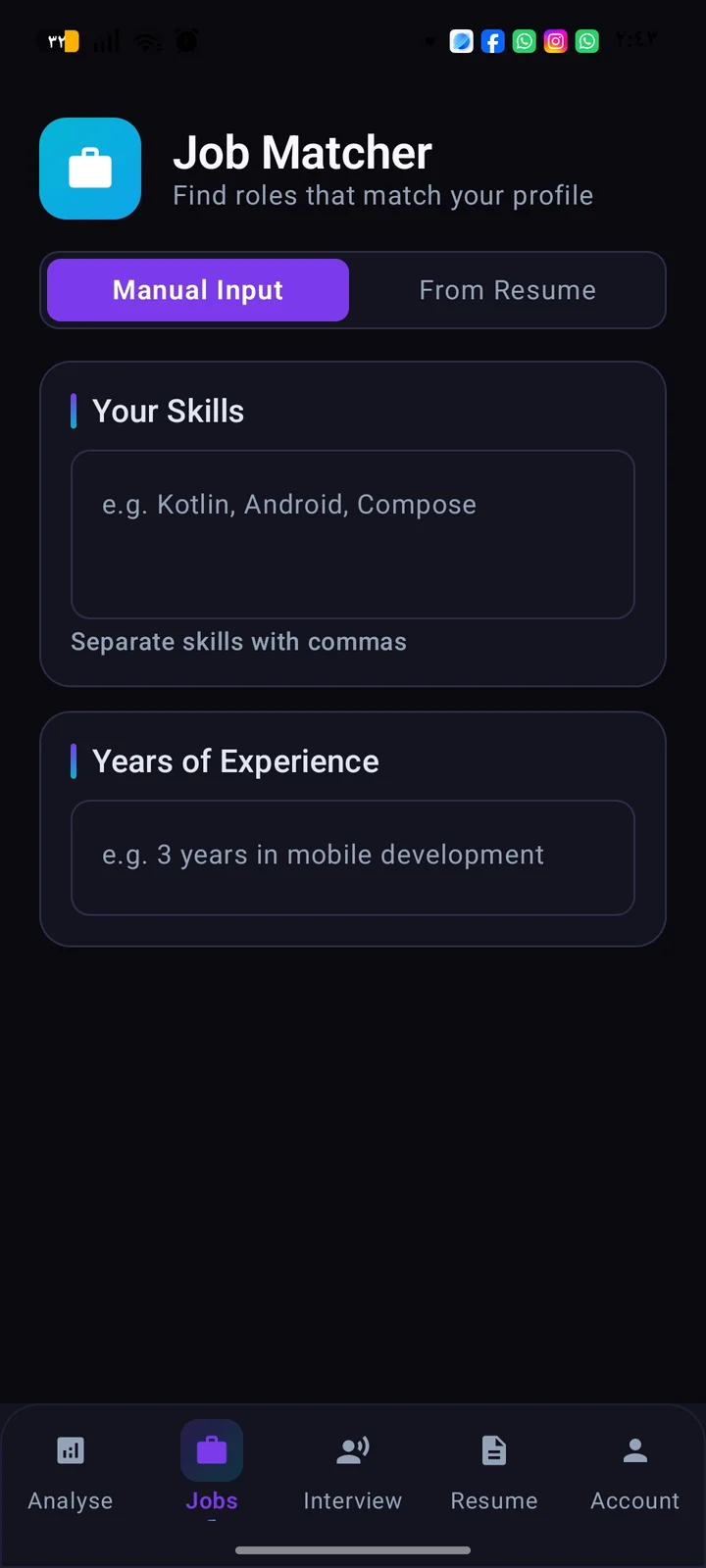
AI career toolkit: resume builder, analysis, job matching and interview practice.
PrototypeAndroidAI
Next project
Islamic Keyboard