CodePortميناء الكود
A GitHub repository as a living isometric port city — every gesture runs a real Git command.
- Status
- Phase 4 of the plan: all six prototype screens running over one world, Day/Night, RTL and TalkBack.
- Period
- 2026
- Platforms
- Android
- Repository
- Private — available on request
- Live
- —
01Overview
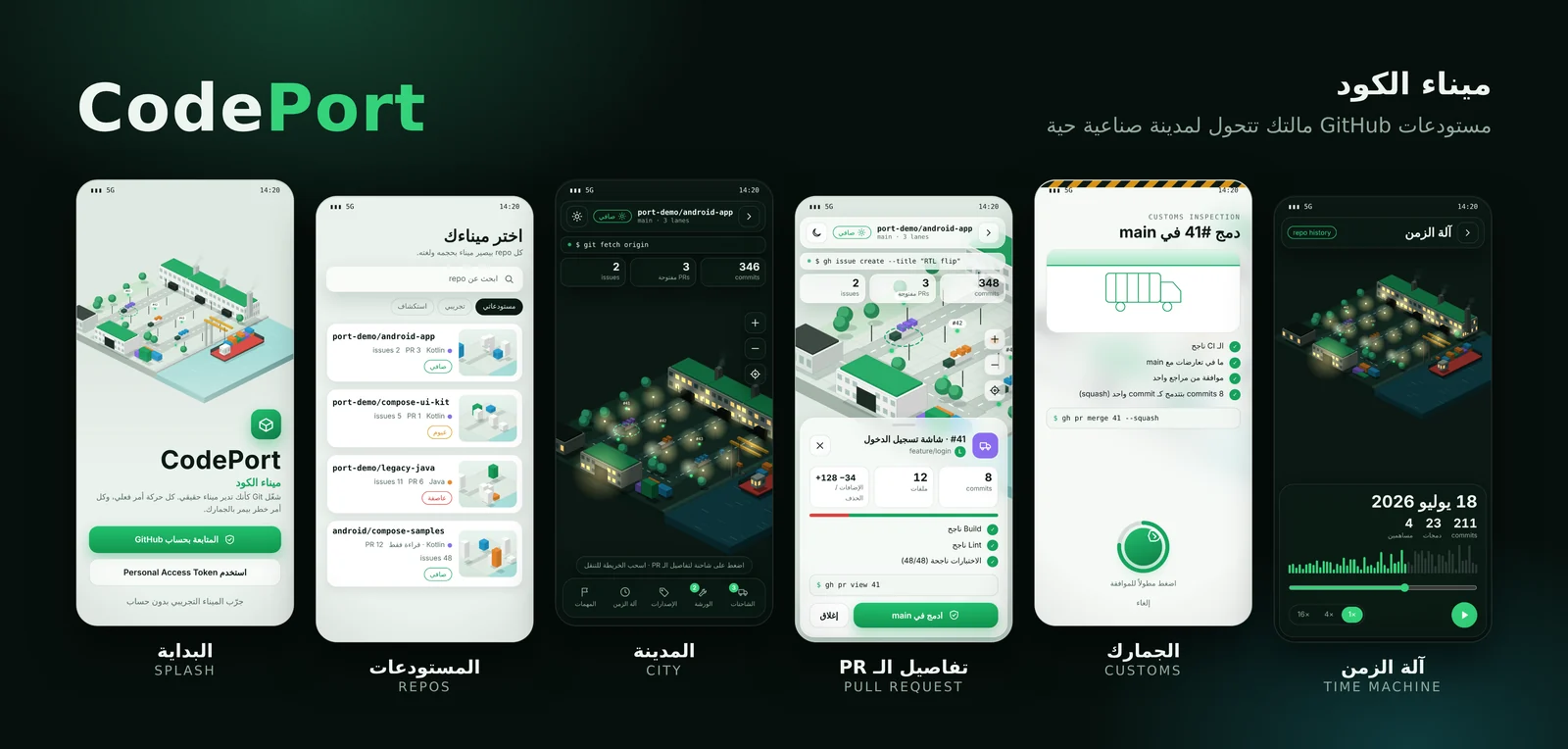
Commits are crates, pull requests are trucks, CI is the weather. Dangerous commands pass through Customs, where what is shown is exactly what runs, behind a hold-to-confirm. Six screens over one persistent world: splash, repositories, city HUD, PR sheet, customs and a time machine that scrubs history as the city grows.
By the numbers
- CPU p95 per frame, stress scene
- 2.7 ms
- CPU p95 per frame, stress scene
- ADR 0001 benchmark
- fps, normal scene
- 59.9
- fps, normal scene
- ADR 0001 benchmark
- allocations per frame
- 0
- allocations per frame
- JVM test
- commits
- 49
- commits
- git history
02The problem
Git is powerful and abstract; its dangerous operations look exactly like its safe ones. Mobile Git clients either hide the power or expose raw commands with no sense of consequence.
03The solution
A deterministic world model and simulation in pure Kotlin, an isometric renderer with a baked sprite atlas, and a customs state machine where the exact command is displayed and only that command runs.
04Screens
05System architecture
- L1Features
- city
- pullrequest
- customs
- repos
- timemachine
- splash
- L2Engine (pure Kotlin)
- World model
- Deterministic simulation
- Isometric math
- Depth sorting
- Director
- L3Render
- Sprite baking → atlas
- Zero-allocation frame renderer
- Compose Canvas host
- L4Data
- GitHub REST client
- ETag polling
- Rate limits
- Room cache
- Tink-encrypted token
- L5Safety
- Customs state machine
- PortCommand
- Hold-to-confirm
- Sandbox-only real merges
06Engineering decisions
Compose Canvas over SurfaceView — by measurement
Two hosts were built around the same renderer and benchmarked on a mid-range phone (Snapdragon 6 Gen 1). Compose Canvas won on every axis: CPU p95 2.5–2.7 ms at ~250 entities against an 8 ms budget, 0.17–0.34% jank, versus 9.3–9.9 ms and 1.2–1.5% for SurfaceView.
Zero allocations per frame
Static art is baked once into hardware-bitmap atlas pages at start-up; each frame is depth-sorted blits and batched lines. The simulation's zero-allocation guarantee is verified by a JVM test.
Real merges only in a sandbox
Real merges work in debug builds only, against a sandbox repository with a fine-grained token, and the switch is off at every launch.
My contribution
Concept, ADRs, engine, renderer, data layer and the six screens — 150 Kotlin files across 15 modules.
Technology
- Kotlin
- Jetpack Compose
- Compose Canvas
- Hilt
- Room
- Tink
- kotlinx.serialization
- Coroutines
- GitHub REST API
- Macrobenchmark
- MockWebServer
- Multi-module
- detekt
- ktlint
How this was verified
Source, README and ADRs reviewed, including the on-device benchmark tables. Visuals were supplied by Yazan: a screens overview and a capture from a real phone.
Related projects
- Kكفّ
Kaff
- CameraX
- MediaPipe HandLandmarker
- GestureEngine
- Send VM
- Receive VM
- Fist → grab
- Palm 700 ms → accept
- SendController + reducer
- ReceiveController + reducer
Kaff
كفّGrab a file with your fist, open your palm at the other phone — and it moves. Offline.
PrototypeAndroidAI 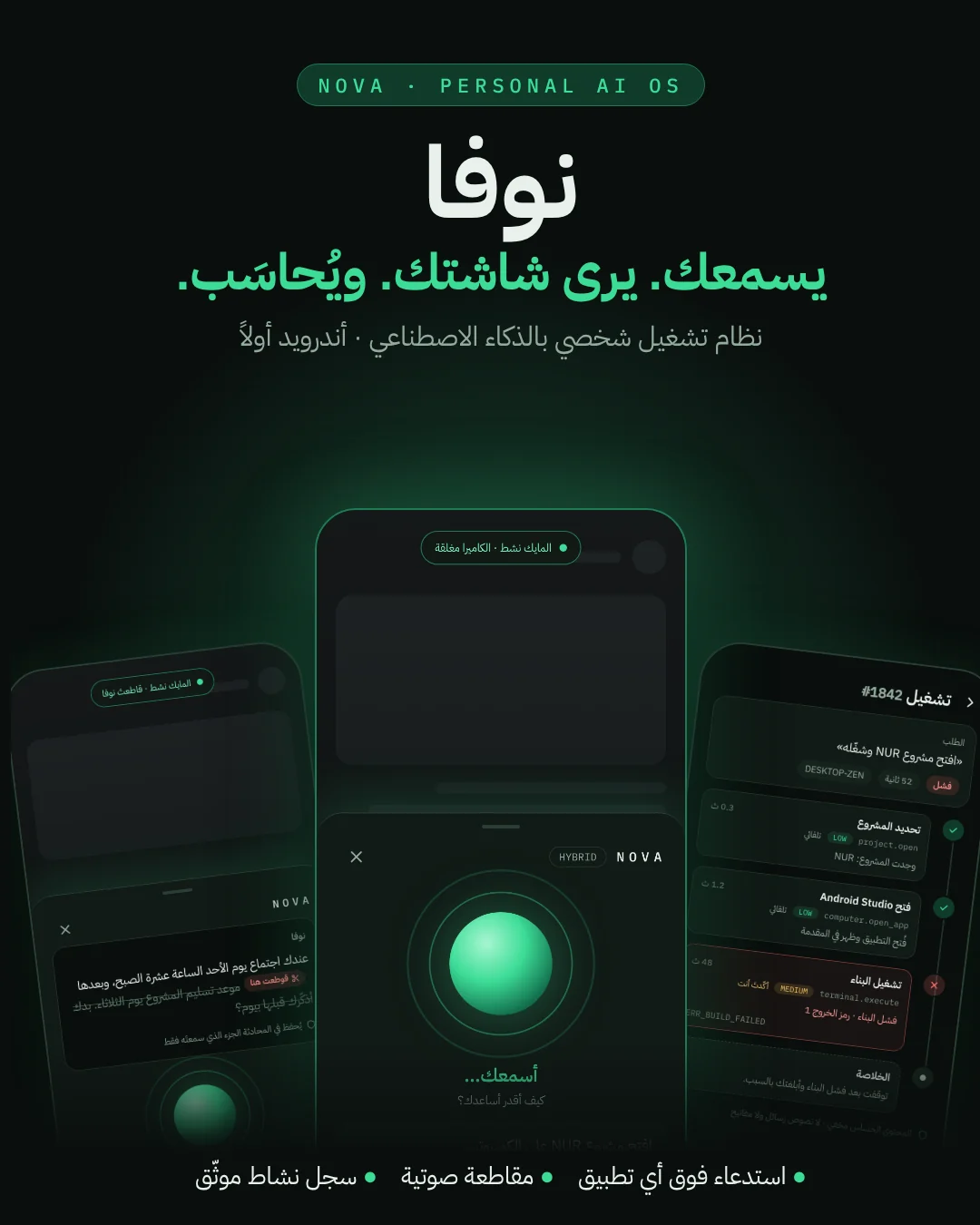
NOVA
A voice-first personal AI operating system — where a permission layer, not the model, decides what may run.
In developmentAndroidAIDesktop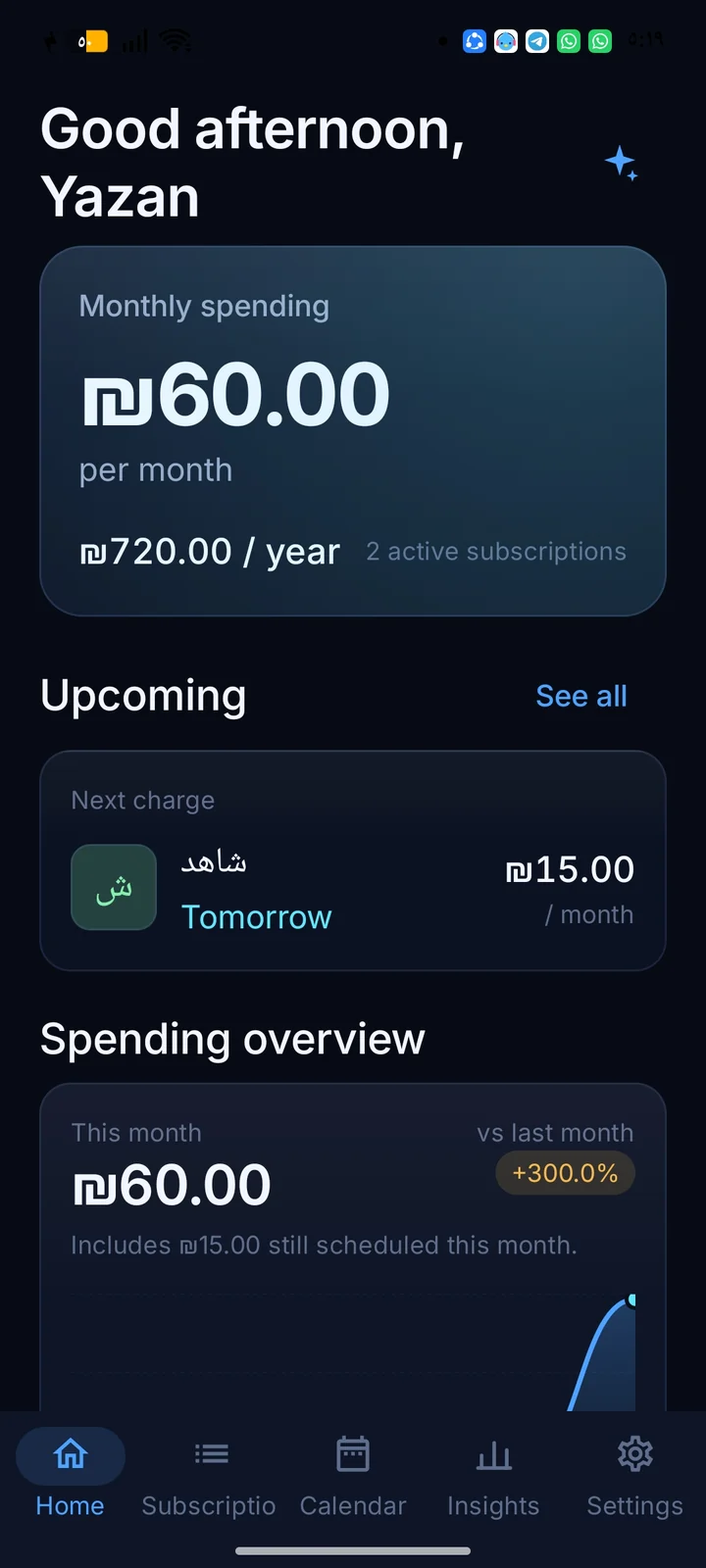
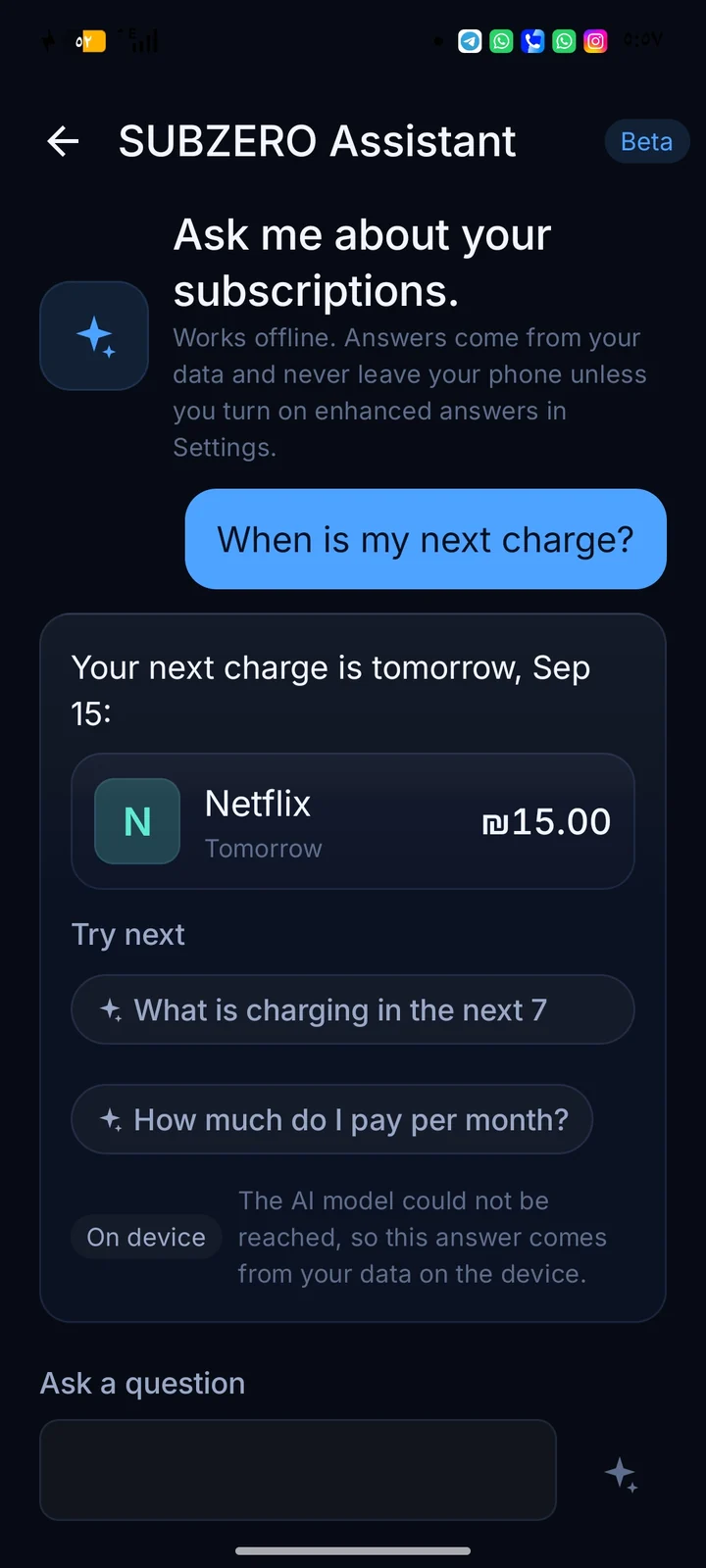
SUBZERO
Know what you pay. Before it charges you.
LiveAndroidAI
Next project
Kaff